
As roofing material cost comparison becomes crucial for homeowners and builders alike, this article delves into the intricate details of different roofing materials. With a focus on providing valuable insights, readers are invited to explore the world of roofing costs with a blend of expertise and clarity.
In the following paragraphs, we will explore the types of roofing materials, cost factors to consider, a cost comparison table, and the environmental impact of different materials.
Types of Roofing Materials
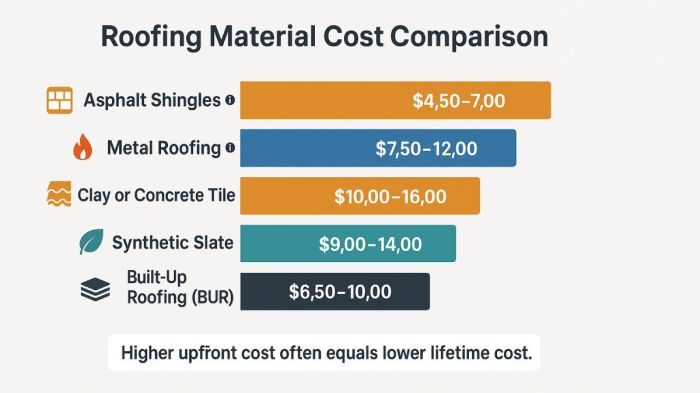
When it comes to roofing materials, there are several options available, each with its own set of advantages and disadvantages. It's important to consider factors like durability, longevity, and cost when choosing the right material for your roof.
Asphalt Shingles
- Asphalt shingles are the most common roofing material used in residential buildings.
- Advantages: Affordable, easy to install, comes in a variety of colors.
- Disadvantages: Less durable than other materials, may need replacement sooner.
- Durability: Typically lasts 15-30 years depending on quality and maintenance.
Metal Roofing
- Metal roofing is known for its longevity and durability.
- Advantages: Long lifespan, energy-efficient, can withstand extreme weather conditions.
- Disadvantages: Higher initial cost, can be noisy during rain or hail.
- Durability: Can last 40-70 years or more with proper maintenance.
Wood Shingles
- Wood shingles offer a natural and rustic look to a roof.
- Advantages: Environmentally friendly, good insulation properties.
- Disadvantages: Prone to rot, mold, and insect damage if not properly maintained.
- Durability: Typically lasts 20-30 years with regular maintenance.
Clay Tiles
- Clay tiles are popular in Mediterranean or Spanish-style homes.
- Advantages: Fire-resistant, long-lasting, low maintenance.
- Disadvantages: Heavy, may require additional roof support, higher cost.
- Durability: Can last 50-100 years or more with proper installation and care.
Cost Factors to Consider
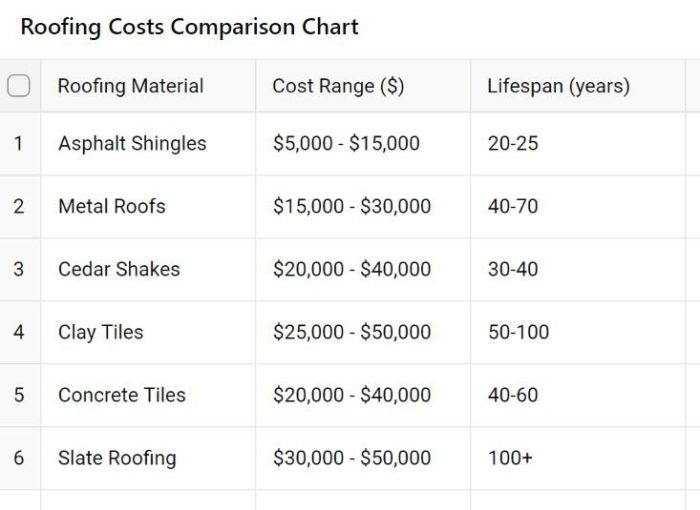
When it comes to selecting roofing materials, there are several cost factors to consider that can impact the overall price of your project. Understanding these components can help you make an informed decision based on your budget and needs.The main cost components involved in roofing material selection include the material cost, installation cost, maintenance cost, and the lifespan of the material.
Each of these factors plays a crucial role in determining the total cost of your roofing project.The quality of materials also affects pricing significantly. High-quality materials often come with a higher price tag but can offer better durability, longevity, and overall performance.
Cheaper materials may save you money upfront but could end up costing more in the long run due to frequent repairs or replacements.Installation costs for different roofing materials can vary based on the complexity of the project, the type of material being used, and the labor required.
For example, materials like asphalt shingles are generally more affordable to install compared to metal or slate roofing, which require more expertise and labor.
Comparison of Installation Costs
When comparing installation costs for different roofing materials, it's essential to consider not only the upfront expenses but also the long-term savings and benefits. Here is a general overview of installation costs for common roofing materials:
Asphalt Shingles
Asphalt shingles are one of the most affordable roofing materials to install, with an average cost of $1,700 to $8,400 for a typical roof.
Metal Roofing
Metal roofing is more expensive to install, ranging from $7,500 to $30,000, but offers superior durability and energy efficiency.
Slate Roofing
Slate roofing is the most expensive option, with installation costs starting at $10,000 and reaching up to $75,000. However, it can last for over a century with proper maintenance.It's important to weigh the initial cost of installation against the long-term benefits and durability of the roofing material to make the best choice for your home.
Consulting with a professional roofer can also help you understand the costs involved and make an informed decision.
Cost Comparison Table
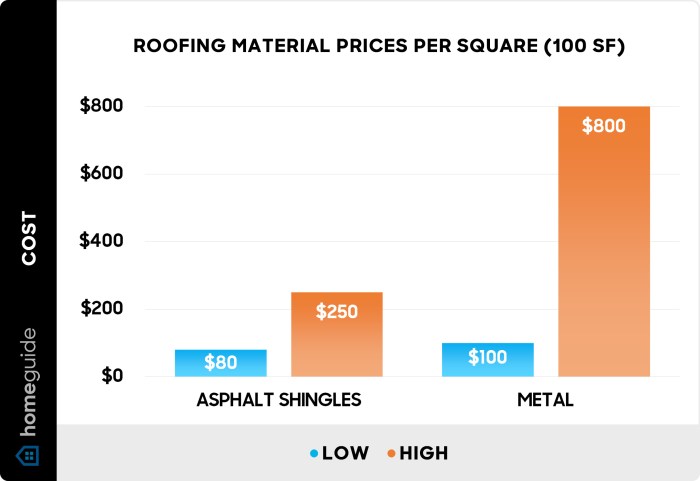
When deciding on the best roofing material for your home, it's essential to consider the cost implications. A cost comparison table can help you make an informed decision based on factors like average cost, durability, and maintenance expenses.To effectively use the cost comparison table, start by identifying the different roofing materials you are considering.
Then, compare the average cost per square foot of each material, along with their durability and maintenance requirements. This will give you a clear overview of the long-term costs associated with each option, helping you choose the most cost-effective and suitable material for your needs.
Popular Roofing Materials Cost Comparison
| Material Type | Average Cost per Square Foot | Durability | Maintenance Expenses |
|---|---|---|---|
| Asphalt Shingles | $1.50
| 15-30 years | Low |
| Metal Roofing | $5.00
| 40-70 years | Low |
| Wood Shakes | $6.00
| 20-40 years | High |
| Tile Roofing | $10.00
| 50+ years | Low to Medium |
Environmental Impact
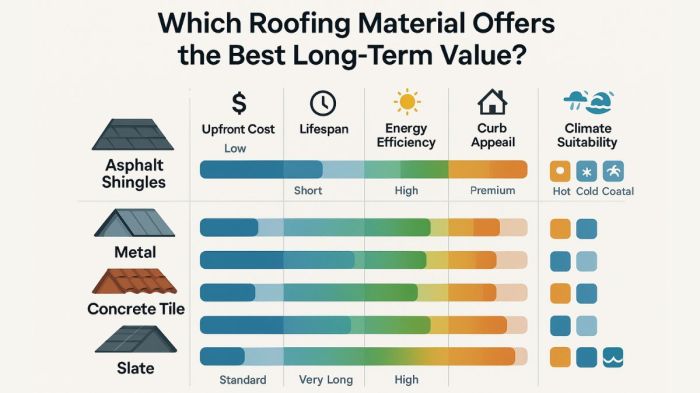
When it comes to choosing roofing materials, it's important to consider the environmental impact of your options. From eco-friendliness to sustainability factors, the choice of materials can have long-term effects on the environment.
Eco-Friendliness of Various Roofing Materials
Different roofing materials have varying degrees of eco-friendliness. For example, metal roofs are often considered environmentally friendly due to their recyclability and longevity. On the other hand, asphalt shingles, while common, are not as sustainable because of their shorter lifespan and higher carbon footprint.
Sustainability Factors
Recyclability and energy efficiency are key sustainability factors to consider when evaluating roofing materials. Materials like metal, clay tiles, and wood shakes are known for their recyclability, which can reduce waste and environmental impact. Additionally, energy-efficient roofing materials such as cool roofs can help lower energy consumption and reduce greenhouse gas emissions.
Long-Term Environmental Costs
It's essential to compare the long-term environmental costs of different roofing materials. While some materials may have a higher upfront cost, they could be more sustainable in the long run due to their durability and energy efficiency. Considering factors like maintenance, lifespan, and recyclability can help make an informed decision that minimizes the environmental impact of your roofing choice.
Epilogue
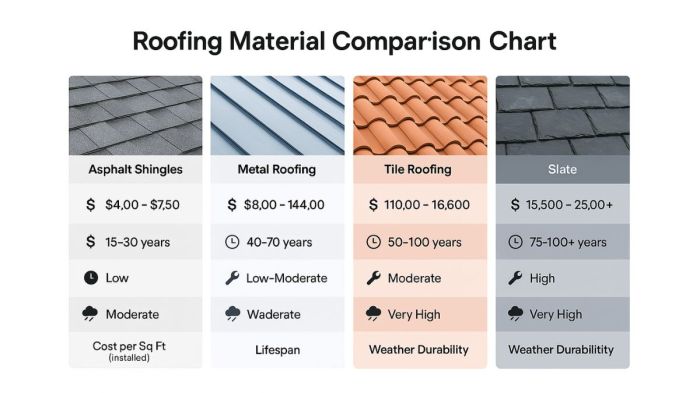
In conclusion, understanding the nuances of roofing material costs is essential for making informed decisions. By weighing the pros and cons of each material, considering cost factors, and evaluating environmental impacts, individuals can choose the best roofing option for their needs.
Question & Answer Hub
What are the key factors to consider when comparing roofing material costs?
When comparing roofing material costs, factors such as durability, maintenance expenses, and installation costs play a crucial role in decision-making.
How do environmental impacts influence the choice of roofing materials?
Environmental impacts, including eco-friendliness, recyclability, and energy efficiency, can sway individuals towards more sustainable roofing options despite potentially higher initial costs.
Is there a significant difference in long-term costs between different roofing materials?
Yes, certain materials may have higher upfront costs but lower maintenance expenses over time, making them more cost-effective in the long run.